BIG TAX WRITEOFFS FOR DATA CENTERS
President Trump gives AI what it wants
It is absolutely a massive tax write-off boom for AI data centers, but the “One Big Beautiful Bill” (OBBBA) creates a specific distinction between the chips inside and the building outside. In my opinion this was what the AI kings asked for and received from President Trump as a way to reach American supremacy in Artificial Intelligence. It’s almost all a tax writeoff! This article is not financial or tax advice - do your own research and consult your own tax accountant.
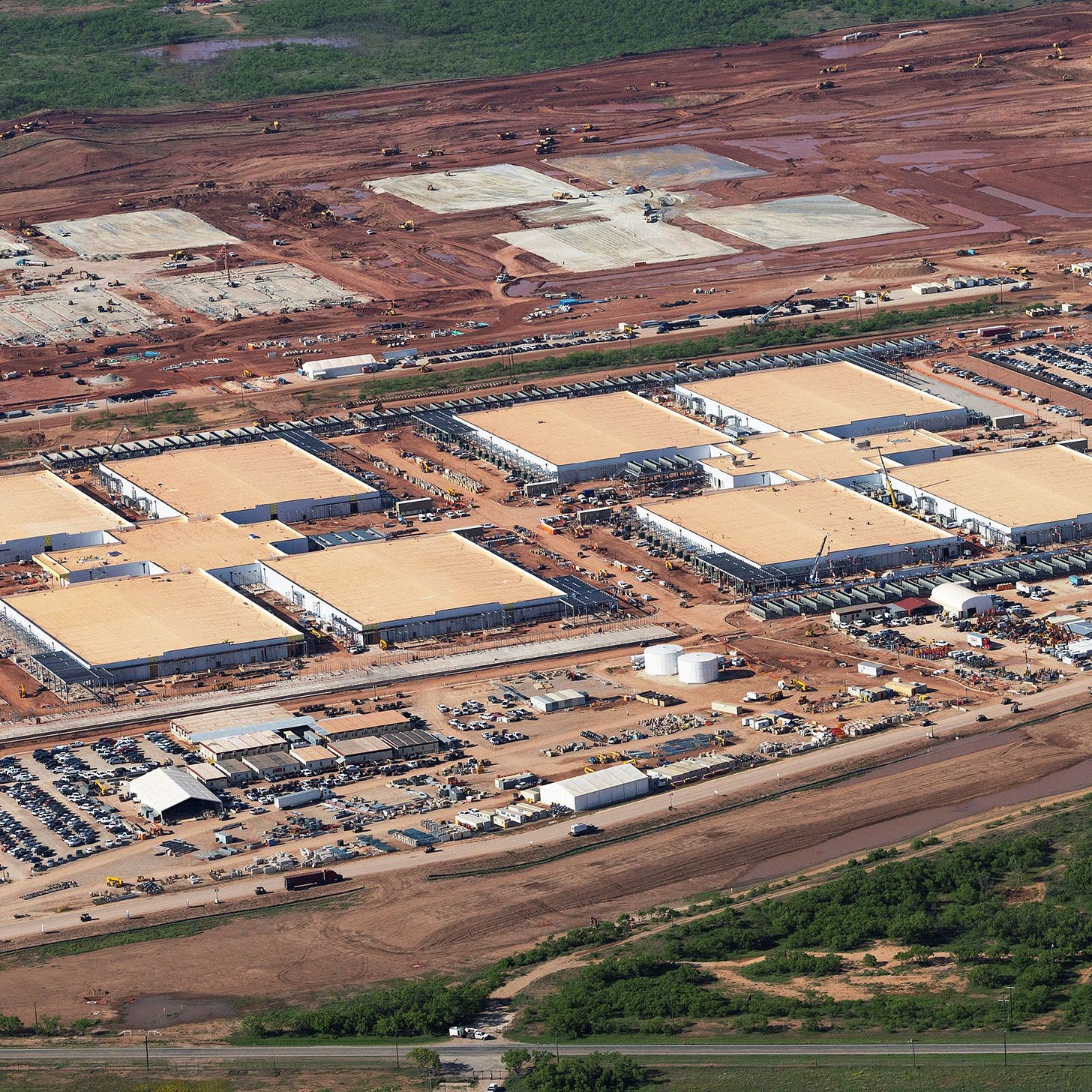


Based on the final text of the law signed in July 2025 and the accompanying Executive Orders, here is how the “boom” works for AI & Power investment thesis (specifically for companies like Microsoft, Google, CoreWeave, and the nuclear utilities supplying them).
1. The “Hardware” is effectively free (Tax-wise)
This is the biggest win. Because the OBBBA permanently restored Section 168(k) Bonus Depreciation to 100%, data center operators can immediately write off the vast majority of their CapEx.
* The Boom: When a company like Microsoft buys $1 billion worth of NVIDIA Blackwell GPUs, servers, and racks, they can deduct that full $1 billion in Year 1.
* Previous Law: Under the old schedule (phasing down to 40% in 2025), they would have had to spread that deduction over 5-7 years, which hurts cash flow.
* Result: This massively increases the “free cash flow” available to tech giants to keep buying more chips, directly supporting the NVDA/TSM revenues.
2. The “Shell” Battle (Section 168(n))
This is where it gets tricky. The new Section 168(n) “Factory Write-Off” allows 100% expensing for manufacturing real estate (the actual building shell).
* The Conflict: OpenAI and other tech giants lobbied hard to have “Computing” classified as “Manufacturing” (arguing they are manufacturing “tokens” or “intelligence”).
* The Verdict: The IRS and Treasury have currently interpreted “Qualified Production Property” (QPP) as requiring the creation of “Tangible Personal Property.” Since digital tokens are intangible, the building shell itself (the concrete and steel walls) likely does not qualify for the 100% immediate write-off.
* The Loophole (Cost Segregation): However, data centers are unique. About 70-80% of a data center’s cost isn’t the “building”—it’s the specialized cooling (Vertiv, Schneider), backup generators (Cummins, Generac), and massive electrical substations (Quanta, MYR, Eaton). Under the OBBBA, all of that infrastructure counts as “equipment” (168(k)), not “building”, thus full writeoff.
* Bottom line: They can write off about 80-90% of the entire project immediately, even without the “Manufacturing” label for the shell.
3. The “Permitting” Boom (The Executive Order)
While the tax bill was good, the separate Executive Order signed by President Trump on July 23, 2025, is arguably more important for your Nuclear/Energy thesis.
* The Order: It specifically defines a “Data Center Project” as any facility drawing 100 MW or more (the gigawatt-scale sites).
* The Benefit: It forces federal agencies to fast-track environmental reviews (NEPA) for these sites and, crucially, encourages placing them on Federal land or near existing nuclear sites to bypass local zoning delays.
* The Winner: This is a direct tailwind for companies like Constellation Energy (CEG) and Vistra, as it streamlines the process of co-locating these massive AI clusters directly at the power plant source.
What is 100 MW?
To visualize this scale:
• A typical large Amazon delivery warehouse uses about 1-2 MW.
• A standard enterprise data center (like for a bank) uses 10-20 MW.
• 100 MW is enough electricity to power approximately 80,000 homes.
• The “AI Factories” (Stargate): The massive projects you are tracking (like the one in Abilene) are planning for 1,000 MW (1 Gigawatt). This Order was written specifically for them.
2. The “VIP Lane” (Why they want this designation)
If a project hits that 100 MW threshold, it unlocks three massive benefits that standard developers don’t get:
• NEPA Fast-Track: The federal government sets a strict 2-year deadline for all environmental reviews (bypassing the usual 4-5 year purgatory).
• Federal Land Access: It allows these data centers to be built on federally owned land (like near existing nuclear sites or military buffers), which completely bypasses local “NIMBY” (Not In My Back Yard) complaints.
• Grid Priority: It effectively orders the Department of Energy to prioritize these sites for grid connection, pushing them to the front of the line ahead of other commercial projects.