The Space Race - Part Deux -RDW, ASTS, GSAT, BFS and Space Datacenters
The Space Race - Part Deux: RDW, ASTS, GSAT, BFS, and Space Data Centers
The Space Race - Part Deux: RDW, ASTS, GSAT, BFS, and Space Data Centers
Subtitle: Exploring Connectivity, Power, Computing, and Spectrum in the New Commercial Space Era
Introduction: A New Era Beyond Rockets
The original Space Race of the 20th century was defined by national prestige and lunar landings. Today, in 2026, a commercial “Space Race - Part Deux” is underway, driven by connectivity, computing power, and infrastructure. Private companies are building the foundational layers of a space-based economy. Three standout players illustrate this shift: AST SpaceMobile’s seamless global cellular coverage, Redwire’s critical power solutions, and SpaceX’s vision for orbital AI data centers and broadband spectrum expansion. These elements are interconnected, with risks and opportunities shaping the future.
AST SpaceMobile: Redefining Global Connectivity (ASTS)
AST SpaceMobile (NASDAQ: ASTS) is pioneering a space-based cellular broadband network that connects directly to unmodified smartphones. Its BlueBird satellites feature massive unfolding antennas—hundreds of square meters—delivering potentially broadband speeds (up to 120 Mbps) as an extension of existing carriers like AT&T and Verizon. These satellites are much larger than SpaceX Starlink’s “hive” satellites, which are more multitudinous. ASTS estimates 100–200 satellites for global coverage.
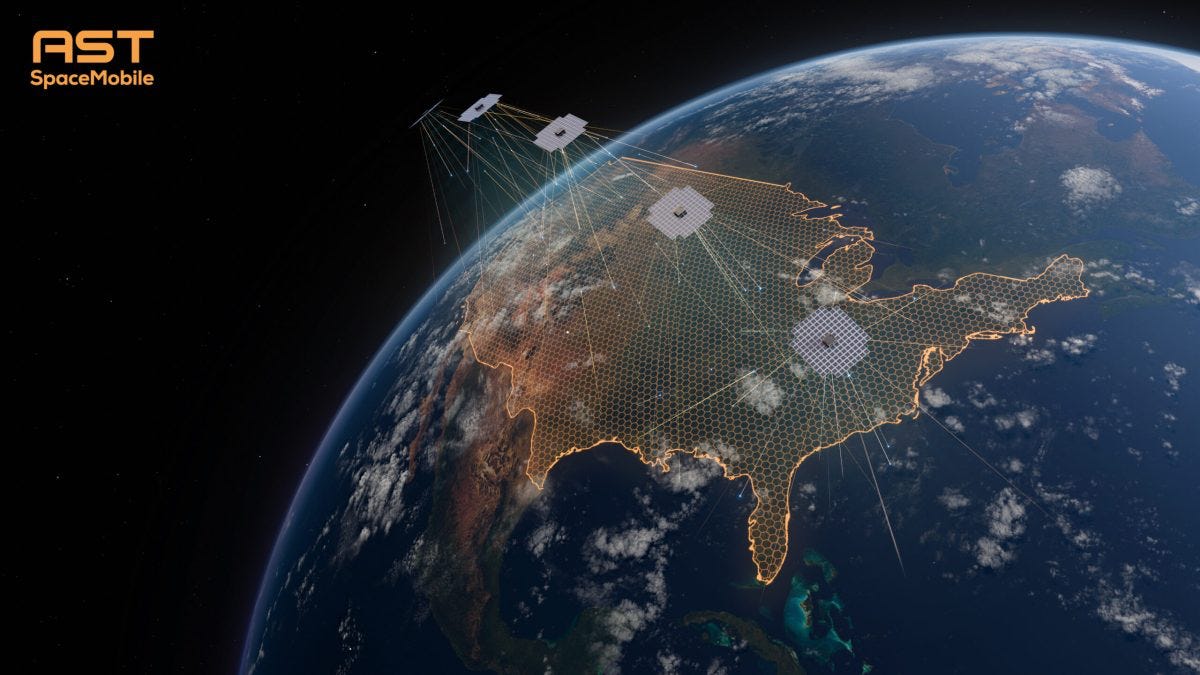


AST SpaceMobile BlueBird Satellite Concept – Artistic rendering of a deployed BlueBird satellite orbiting Earth.
This approach contrasts with competitors like SpaceX’s Starlink direct-to-cell, which initially focuses on texting and requires ecosystem integration. As of January 6, 2026, ASTS trades around $95–$96 per share with a market capitalization exceeding $35 billion, reflecting investor optimism despite minimal current revenue. Recent announcements of accelerated 2026 launches underscore execution momentum in this high-stakes bet on eliminating cellular dead zones worldwide.
ASTS Launch Risks
AST SpaceMobile faces substantial launch-related risks as it seeks to deploy its Block 2 BlueBird satellites in 2026, with plans to orbit 45 to 60 units to enable initial commercial service. These risks stem from historical patterns, technical complexities, and operational dependencies, potentially impacting timelines, financial position, and investor confidence.
Historical Launch Delays AST SpaceMobile has experienced repeated schedule slippage. For instance, the BlueBird 6 launch—originally targeted for earlier in December 2025—was postponed multiple times, resulting in stock price declines of approximately 9–11% on related announcements. Although BlueBird 6 successfully reached orbit on December 23, 2025, and BlueBird 7 has been shipped for integration as of early January 2026, such delays highlight ongoing challenges in coordination with launch providers (e.g., ISRO, SpaceX, or others). Any further postponements in the accelerated 2026 cadence—aimed at one launch every one to two months—could defer revenue-generating service beyond intermittent coverage targets.
-
Technical and Deployment Challenges The BlueBird satellites feature massive unfolding arrays (hundreds of square meters), introducing risks during deployment, such as mechanical failures in unfurling mechanisms or thermal management issues in orbit. On-orbit failures could render satellites inoperable, as evidenced by general industry concerns for large, complex payloads. Additionally, competitors like SpaceX have raised objections regarding orbital sustainability and potential interference, which may complicate regulatory approvals or increase scrutiny.
-
Execution and Scaling Risks Scaling production and launches to 45–60 satellites represents an industrial challenge for a company with limited prior large-scale deployments. Manufacturing bottlenecks, supply chain disruptions, or integration issues could cascade into further delays. Analysts note that execution reliability remains a core concern, with the stock’s elevated valuation (market capitalization exceeding $35 billion despite minimal revenue) leaving limited margin for error.
-
Financial Implications Persistent delays may necessitate additional capital raises, leading to shareholder dilution amid ongoing cash burn (e.g., significant quarterly net losses reported in prior periods). This risk is amplified by the capital-intensive nature of satellite development and launches.
-
Competitive and External Factors Advancements by rivals, such as SpaceX’s Starlink direct-to-cell rollout, could erode ASTS’s first-mover advantage if deployment lags. Regulatory hurdles, including spectrum coordination and interference mitigation (raised by entities like T-Mobile), add further uncertainty.
As of January 6, 2026, recent progress—including the successful BlueBird 6 deployment and preparations for subsequent launches—has supported stock momentum. However, these launch risks underscore the speculative nature of the investment, where flawless execution is essential to realizing the company’s ambitious direct-to-cell broadband vision. Investors should monitor upcoming launch milestones closely for indications of mitigated or heightened risk.
Redwire: The Unsung Power Behind Space Infrastructure (RDW)
While headlines focus on rockets and satellites, sustainable power remains a fundamental challenge in orbit. Redwire Corporation (NYSE: RDW) excels here with its Roll-Out Solar Array (ROSA/iROSA) technology—flexible, lightweight panels that deploy like a carpet from a compact cylinder.
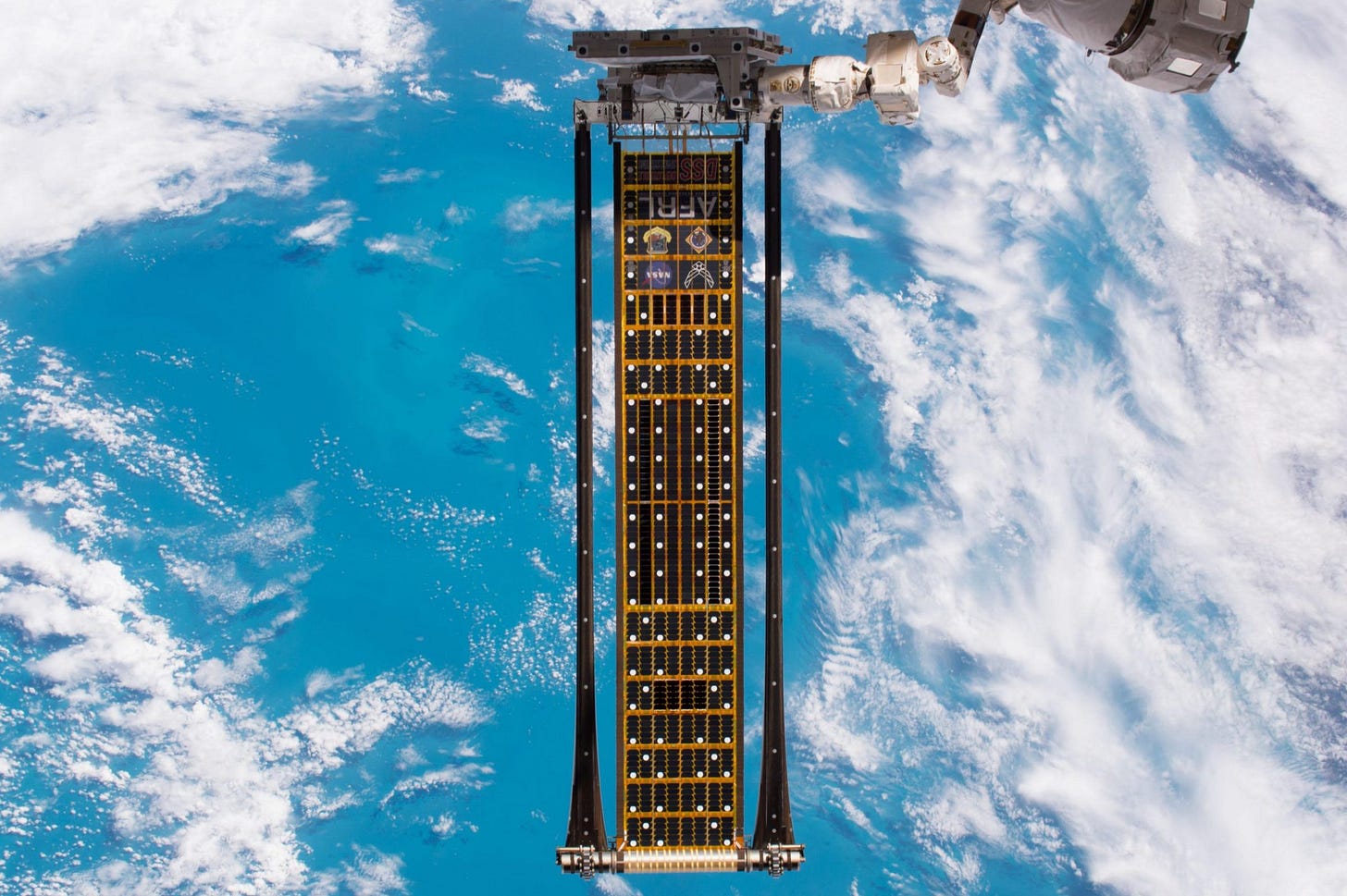
Redwire ROSA Solar Array Deployed on ISS – Photo of the array in orbit against Earth’s backdrop.
These arrays achieve superior power-to-weight ratios (up to 400 watts per kilogram) and have proven reliable on the International Space Station and upcoming lunar missions. With a market cap around $1.77 billion and shares near $10.70 as of early 2026, Redwire represents the “picks and shovels” play in space—essential for megawatt-scale applications, from lunar bases to large satellites. Its technology is ideally suited for power-hungry orbital assets, positioning it as a quiet beneficiary of industry growth. SpaceX could utilize Redwire’s ROSA panels for the space data center project.
SpaceX’s BFS: Orbital Computing and the AI Frontier
Elon Musk’s SpaceX is pushing boundaries further with plans for orbital data centers optimized for AI training. These massive structures—potentially scaled-up Starlink variants or custom “Big F***ing Satellites” (a fitting informal moniker)—would leverage radiant cooling in vacuum, constant solar exposure, and minimal latency for interconnects.
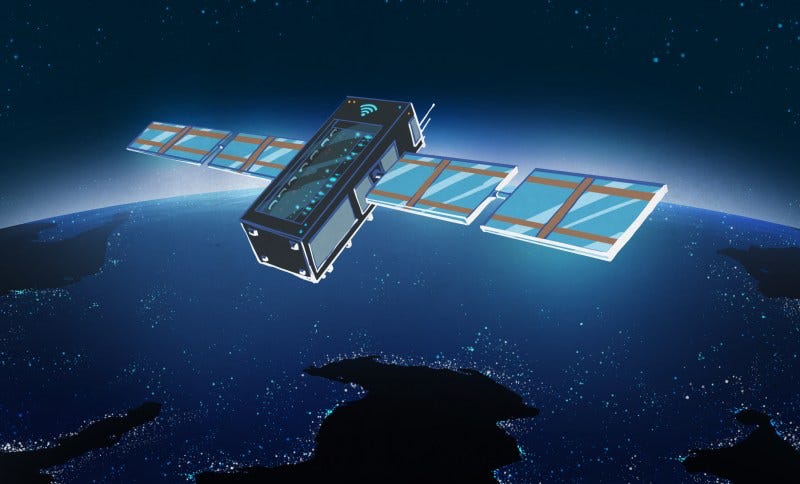
Conceptual Orbital Data Center – Illustration of a large satellite with solar arrays and radiators in space.
Recent reports indicate SpaceX aims for deployments by late 2026 or beyond, enabled by Starship’s heavy-lift capacity. Radiators and expansive solar wings (potentially from providers like Redwire) would maintain energy balance on a one-to-one area ratio. This vision addresses terrestrial constraints like heat dissipation and power limits, potentially making orbital training more efficient for frontier models. Amid rumors of a 2026 SpaceX IPO, these initiatives highlight the convergence of space access and AI compute.
Orbital Heights for the BFS: Initial Tests vs. Lagrange Point 5
The orbital altitude for SpaceX’s conceptual orbital data centers remains speculative as of January 2026, with no official detailed plans released by Elon Musk or SpaceX. However, insights from public statements and industry analyses suggest a phased approach, prioritizing accessibility for initial deployments before considering more remote, stable locations.
Initial Test Deployments and Repair Considerations Early prototypes or test versions of these orbital AI training facilities are likely to be placed in low Earth orbit (LEO), typically at altitudes between 500 and 1,000 kilometers. This aligns with SpaceX’s existing Starlink operations and planned enhancements to Starlink V3 satellites, which are expected to incorporate scaled-up compute capabilities as early as 2026.
-
Rationale for LEO in initial phases: Such altitudes allow for relatively straightforward access using Starship or existing launch vehicles. Critically, they enable potential servicing or repair missions—deploying robotic probes, crewed vehicles, or retrieval operations if components fail (e.g., cooling systems, solar arrays, or processors). At these heights, delta-v requirements for rendezvous are manageable, and atmospheric drag, while present, can be mitigated with occasional station-keeping thrusters.
-
Sunlight optimization: Discussions in technical communities propose sun-synchronous orbits around 700–800 kilometers, ensuring near-continuous solar exposure by aligning with the Earth’s terminator line.
-
Repair feasibility: Proximity to Earth supports “poking” or intervention, as previously noted—essential for high-value assets potentially costing tens to hundreds of billions. Failures in radiation-hardened components or thermal management could be addressed without permanent loss, reducing risk during technology maturation.
Lagrange Point 5 for Large-Scale “Schooner” Deployments For mature, large-scale versions—envisioned as expansive, long-duration “schooners” optimized for uninterrupted AI training—higher orbits or libration points offer superior stability and energy efficiency.
-
Medium to high Earth orbits (10,000–20,000 kilometers): These provide reduced drag, extended sunlight exposure, and calmer environments, though still within potential reach for advanced servicing.
-
Lagrange Point 5 (L5): This gravitationally stable location in the Earth-Sun system (trailing Earth in its orbit) represents an endgame option for permanent installations. It offers perpetual sunlight (minimal eclipses), zero natural decay, and isolation from terrestrial interference. However, the transfer requires significantly higher energy (months-long trajectories) and precludes practical repair—if a critical failure occurs, the asset would be irretrievable with current technology.
-
Trade-offs: While ideal for “set-it-and-forget-it” operations sustaining multi-gigawatt compute over decades, L5 deployments would only follow proven reliability in nearer orbits. Industry parallels (e.g., proposals from other firms for L1 placements) highlight similar logic, but SpaceX’s emphasis on iterative testing favors starting closer to home.
In summary, initial BFS tests prioritize repairable LEO altitudes for risk mitigation, while visionary large-scale schooners at L5 would enable unconstrained, eternal operation once the technology achieves near-perfect uptime. Progress depends on Starship maturation and regulatory approvals, with potential demonstrations as soon as late 2026.
SpaceX’s Broader Ambitions: Spectrum Expansion and Potential Acquisitions
SpaceX, through its Starlink division, has demonstrated a strong strategic interest in expanding its access to radio frequency spectrum to enhance network capacity, support direct-to-cell services, and maintain competitive dominance in satellite broadband and mobile connectivity. This expansion is driven by the need for additional bandwidth to accommodate growing subscriber numbers (exceeding 8 million as of late 2025) and advanced features such as hybrid satellite-terrestrial networks.
Major Acquisition: EchoStar Spectrum Deal The most significant development occurred in September 2025, when SpaceX agreed to acquire wireless spectrum licenses from EchoStar in a transaction valued at approximately $17 billion. This deal includes:
-
50 MHz of paired AWS-4 and H-block spectrum.
-
Global Mobile Satellite Service (MSS) rights in the S-band.
A subsequent amendment in November 2025 added unpaired AWS-3 licenses for an additional $2.6 billion, with SpaceX receiving equity stakes in EchoStar as part of the consideration.
This acquisition provides Starlink with exclusive terrestrial and satellite frequencies ideally suited for direct-to-cell (D2C) services, enabling seamless integration with unmodified smartphones and potential expansion into a hybrid network. Regulatory filings indicate that the spectrum will bolster coverage, capacity, and competition against terrestrial carriers and rivals like AST SpaceMobile. The deal has faced scrutiny, including concerns from lawmakers regarding market concentration, but it underscores SpaceX’s willingness to deploy substantial capital for spectrum assets.
Regulatory Efforts for Additional Spectrum Beyond acquisitions, SpaceX has pursued regulatory approvals for higher-frequency bands:
-
In August 2025, SpaceX filed with the FCC to incorporate E-band frequencies (71–76 GHz and 81–86 GHz) into its first-generation constellation for backhaul improvements, aiming to increase per-satellite capacity significantly.
-
Prior approvals have included V-band allocations, supporting very low Earth orbit (VLEO) deployments.
These efforts target millimeter-wave spectrum for high-throughput links, though they have encountered disputes, including objections from competitors like Amazon’s Project Kuiper over interference and power limits.
Potential Future Acquisition Targets As of January 2026, no additional acquisitions have been publicly announced following the EchoStar transaction. However, SpaceX’s aggressive approach suggests ongoing interest in spectrum-rich entities facing financial or regulatory pressures.
Potential targets could include:
-
Smaller satellite operators with underutilized MSS or mid-band licenses, such as ASTS, GSAT, IRDM.
-
Companies in distressed situations similar to EchoStar (which sold assets to resolve FCC inquiries on spectrum hoarding).
Analysts speculate that SpaceX may prioritize organic growth via Starship-enabled deployments and further FCC petitions over immediate mergers, particularly with rumors of a SpaceX IPO in 2026. The EchoStar deal positions Starlink advantageously for global D2C expansion, potentially reducing the urgency for near-term acquisitions unless opportunistic spectrum becomes available.
This spectrum strategy reflects SpaceX’s broader ambition to evolve Starlink from broadband provider to a comprehensive mobile connectivity player, with implications for competition, regulatory oversight, and investor sentiment in the satellite sector. Monitoring FCC proceedings and corporate announcements will be essential for assessing further developments.
Conclusion: Interconnected Bets on the Future
The new space race is symbiotic: ASTS advances connectivity, Redwire powers the hardware, and SpaceX explores computing at scale alongside spectrum dominance. Investors in these areas are wagering on execution amid high risks—launch delays, technical hurdles, and competition. Yet, as Starship matures and orbital infrastructure expands, these interconnected advancements could redefine our technological landscape. The sky is no longer the limit; it is the next frontier. Subscribe for updates on these evolving frontiers. Not financial advice.